
- Home
- Treatments
- Deep Tissue & Sport
Focused Work
Deep Tissue & Sport Massage
Slow, sustained pressure for long-held knots, chronic tightness and recovery. Deep work, never a pain contest.
60 min / $11990 min / $169120 min / $238
You set the pressure ceiling · Licensed MM 47569

- Duration60 · 90 · 120 minutes
- PressureFirm, built gradually, capped by you
- ToolsHands, forearms, elbows
- Best forChronic tension, active bodies
What It Is
Deeper than relaxation, never deeper than you can breathe through
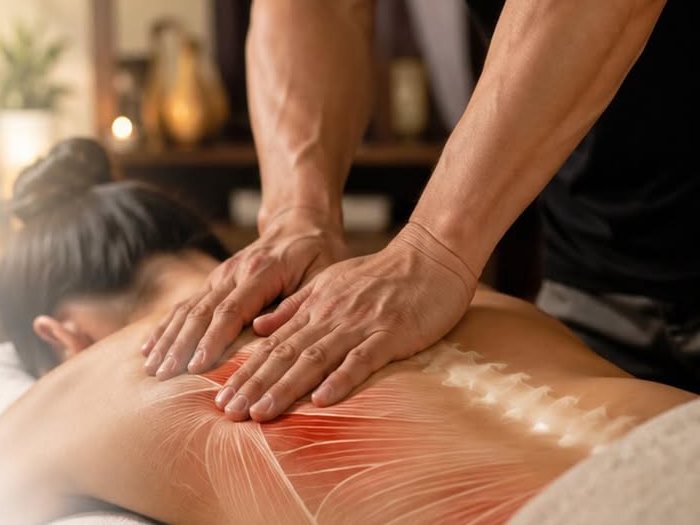
Deep tissue is the Swedish toolkit slowed down and aimed. The tissue is warmed first, then the pressure builds: sustained compression with palms, forearms and elbows, slow strokes along the grain of the muscle, held pressure on tender points until they soften, and short cross-fibre work where a band will not release. The depth comes from patience, not force.
Sport massage is the same craft tuned to what you do. Golfers bring us lats, obliques, forearms and low backs. Paddlers and anglers bring shoulders and forearms. Runners bring calves, hamstrings and glutes. Service members bring everything a PT test and a rucksack can find. We ask what you do, when you next do it, and work accordingly; the two names describe one service shaped around you.
What it is not
It is not a test of endurance. The idea that deep work must hurt to work is a myth the research does not support, and pressure you brace against defeats the point, because a guarding muscle cannot release. If you find yourself holding your breath, we have gone too far. Say so.
What to Expect
Your session, start to finish
Tell us what you do and where it hurts. The hour is built from there.
- Arrive
Ten minutes early on a first visit for a short health form. Medications, especially blood thinners, recent injuries and surgeries matter more here than in a relaxation massage.
- Set the plan
Where the tension is, what you are training for or recovering from, and your pressure ceiling. Your therapist steps out while you undress to your comfort and settle under the sheet.
- The work
Broad warming strokes first, then slower, deeper work on the priority areas with forearms, elbows and thumbs, held pressure on tender points, and stretching where it helps. Pressure builds gradually and never past the number you gave us.
- Afterwards
Lighter finishing strokes, a word about what we found, and simple aftercare. Expect to feel worked, not wrecked.
60 minutes
$119
One main focus, such as the back, neck and shoulders, or the legs, with lighter work elsewhere. Good for a specific complaint or maintenance.
90 minutes
$169
Two focus areas, or the whole body with real depth. The sweet spot for desk workers, golfers and runners, and the best value per minute.
120 minutes
$238
Full-body deep work with time for stretching and an add-on. For event weekends, visitors, or a first deep session with nothing rushed.
Why Guests Book It
What deep work can do, and what it cannot
Honest expectations get better results than big promises. Here is where the evidence stands.
- Eases chronic tightnessSlow, specific pressure on long-held tension in the back, neck, hips and legs.
- A little faster recoveryPost-exercise soreness is modestly reduced in trials. Modestly, and we will say so.
- Short-term relief for sore backs and necksThe best-studied benefit, and a short-term one.
- Thai-trained depthForearms and elbows give broad, even pressure that reaches deep without feeling sharp.
What the research says, and what it doesn't
What the studies actually found:
- A 2020 review of 29 studies and 1,012 participants (Davis et al., BMJ Open Sport & Exercise Medicine) found massage reduced delayed-onset muscle soreness by about 13 percent and improved flexibility by about 7 percent. It found no improvement in strength, jump, sprint or endurance. Recovery comfort, yes. Performance booster, no.
- In a trial of 401 adults with chronic low back pain (Cherkin et al. 2011), deeper "structural" massage and relaxation massage worked about equally well: after ten weekly sessions more than one in three said their pain was much better or gone, against one in twenty-five with usual care. More pain did not mean more gain.
- The Stockholm Neck Trial (619 adults) found deep tissue massage beat advice alone for neck pain in the short term, while exercise did better at six months. We send you home with something to do between visits for that reason.
- Massage does not "flush lactic acid" or "release toxins". Lactate clears within about an hour of exercise on its own, and a 2010 study found massage slowed its removal rather than speeding it. Drink water because you are thirsty, not to flush anything.
The Cochrane review of massage for low back pain reported no serious adverse events across 25 trials. Temporary soreness was the usual cost. Deep work is still work; the screening questions we ask exist for a reason.
Is It Right for You?
Who it suits
A good fit if you…
- Desk and remote workers with tight necks, upper backs and hip flexors
- Weekend warriors sore after leg day, a long paddle, or eighteen holes
- Runners with calves, hamstrings and glutes that have stopped cooperating
- Anglers and boaters with casting shoulders and a low back that stood all day
- Service members from NAS Pensacola, Hurlburt and Whiting training, rucking and lifting
- Anyone with chronic tension who finds relaxation massage too light to touch it
Check with your doctor first if…
- You take blood thinners or bruise easily; deep work needs a doctor's OK and lighter pressure
- You have, or may have, a blood clot; a swollen, warm, painful calf needs a doctor today
- You have osteoporosis, a recent fracture, or a joint replacement
- You have had surgery recently, or have a fresh injury with swelling or bruising; see a clinician first
- You have numbness, radiating pain or sudden severe pain; those need a medical evaluation, not pressure
- You have a heart condition, uncontrolled high blood pressure, kidney disease, or are in cancer treatment
- You are pregnant (deep leg work is out; see our Pre & Post Natal Treatment)
- You have a fever, a skin infection, open wounds or sunburn where we would work
Tell us about anything on this list when you book. We can often adapt pressure, position or focus, and we will say so honestly if a different treatment, or a doctor first, is the better call.
Practical Notes
Before and after your session
Before you come
- Eat lightly an hour or two before, and arrive hydrated as a matter of habit
- Avoid alcohol and a maximal workout right before
- Tell us about medications, injuries, surgeries and your goal for the session
- Rinse off sunscreen and sand; arrive ten minutes early on a first visit
Afterwards
- Move gently; a walk is better than the sofa
- Heat or ice for lingering tenderness, whichever feels better; ice for anything hot or swollen
- Skip all-out efforts for about 24 hours
- Soreness that is severe, lasts more than a few days, or comes with dark urine or weakness needs a doctor
How often? Monthly for maintenance. Weekly for four to six weeks when a stubborn problem needs a run at it, then reassess. Athletes around training peaks, with deep work kept clear of race day.
Add-Ons
Pairs well with
- Cupping$35Traditional suction for deep tightness; expect round marks
- Gua Sha$35Smooth-tool work for knots and mobility
- Hot Stone$25Softens the tissue before deeper work
- CBD Oil$25For one sore area
Cupping and gua sha are traditional techniques some guests swear by; the trial evidence for them is limited, and we will tell you so before using them. See the full add-on list.
Questions Guests Ask
Good to know
Does deep tissue massage hurt?
It should feel intense, not sharp. A satisfying ache on tight spots is normal; holding your breath or tensing up means too much. Tell us and we adjust immediately.
Does it have to hurt to work?
No. In a 401-person trial, deeper structural massage and relaxation massage gave similar relief for chronic low back pain. There is no evidence that more pain means better results.
Deep tissue or sports massage?
Deep tissue is slow, firm pressure for chronic tension, usually across the whole body. Sports massage targets the muscles your activity loads and is timed around training or events. They overlap heavily; tell us your goal and we tune the session.
Why am I sore the next day?
Firm pressure on tight tissue can leave it tender for a day or two, much like a workout. It should fade. If it is severe or lasts more than a few days, see a doctor.
Should I drink lots of water to flush out toxins?
Drink normally. Massage does not release toxins and water does not flush them; your liver and kidneys handle that all day without help.
Does massage get rid of lactic acid?
No. Lactate clears within about an hour of exercise on its own and is not what makes you sore the next day.
Will it help soreness after a race or a hard workout?
A little. Across 29 studies, massage reduced post-exercise soreness by about 13 percent and slightly improved flexibility. It is not a performance booster.
Can I work out afterwards?
Light movement, yes. Skip maximal efforts for about 24 hours after a deep session.
How often should I come?
Monthly for maintenance, weekly for several weeks for a persistent problem, and around training peaks if you compete.
Is bruising normal?
Occasional mild bruising can happen, more so in older guests or anyone on blood thinners. It is not the goal. Large or painful bruises need medical advice.
How long do cupping marks last?
Round marks from suction usually fade within three to fourteen days and are not tender to touch.
I take blood thinners or have osteoporosis. Can I still come?
Possibly, with your doctor's OK and lighter pressure. Tell us at booking.
Do I need to be an athlete?
No. Most of our deep tissue guests are desk workers, golfers, walkers and people with long-standing tension.
What does Thai-trained mean for a deep tissue massage?
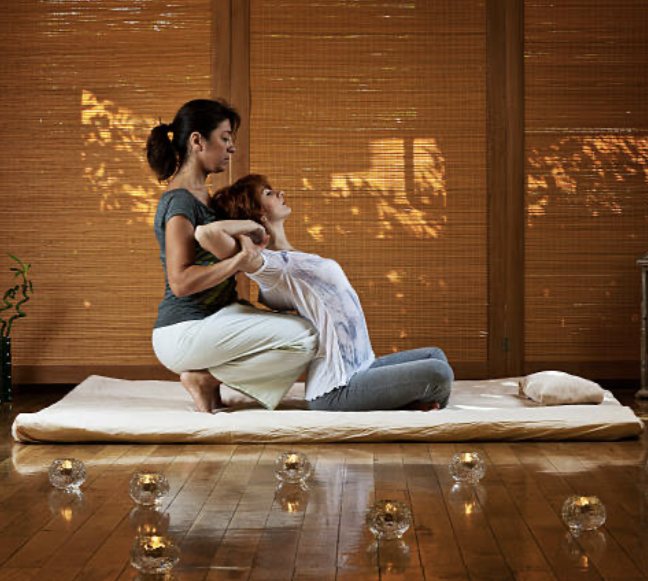
Broad, steady pressure from forearms and elbows rather than pointed digging, rhythmic compression, and stretching woven in where it helps. Deep, even, and unhurried.
“My 90 min massage at Thai Touch was extremely thorough. Ann is very talented…”

Reserve Your Time
Deep work, done right.
Book 90 minutes, tell us what you do and where it hurts, and set your pressure ceiling. We will take it from there.
Massage therapy is for relaxation and wellness. It is not a substitute for medical diagnosis or treatment. Please consult a qualified healthcare professional for persistent, severe or unexplained symptoms.